Advanced AEO Strategies: Winning Citations
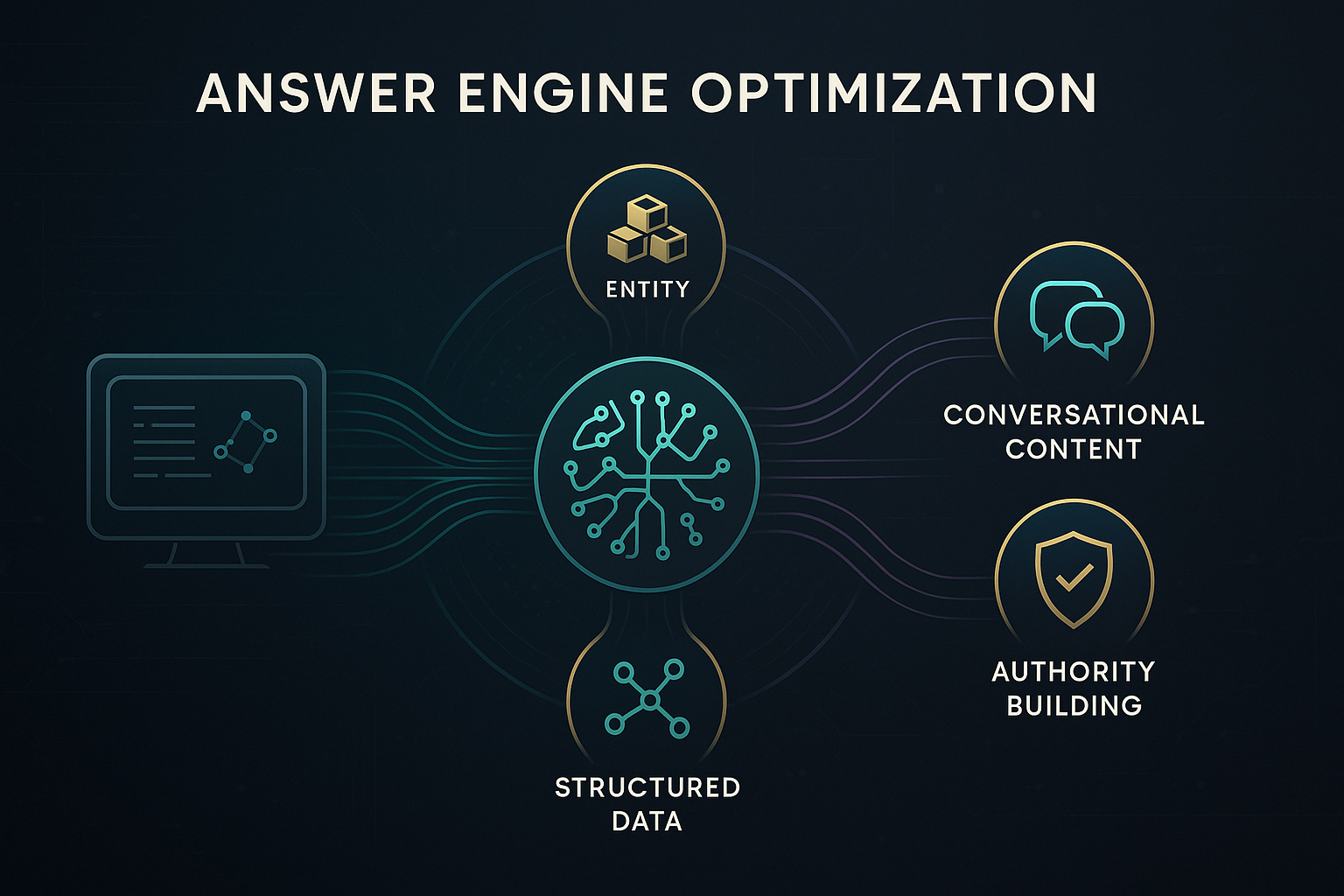
The digital search landscape is shifting at an extraordinary pace, and many brands are beginning to realize that traditional SEO alone is no longer enough. Rankings still matter, but they no longer guarantee visibility.

Increasingly, exposure is determined by whether AI systems choose to cite your content inside generated answers.
That distinction has created a widening divide between businesses that merely understand AEO and those successfully dominating AI-generated search visibility.
Understanding the concept of AEO is easy. Executing it effectively is where most brands struggle.
As organic traffic from traditional search engines continues to fragment, AI-driven discovery is becoming the new battleground.
The challenge is that, unlike conventional SEO, there is no dedicated “AI Search Console” offering transparent reporting, citation tracking, or visibility insights.
Most brands have no passive way to determine whether AI systems are referencing their content, ignoring it entirely, or favoring competitors instead. Measuring that visibility requires intentional tracking frameworks, sophisticated tooling, and workflows specifically adapted for AI search behavior.
The brands succeeding in this environment tend to share several characteristics. Their content is structured for extraction, their insights are differentiated enough to warrant attribution, and they actively measure citation performance to refine their visibility strategies over time.
Here you will get to know the advanced AEO strategies helping brands secure consistent citations in AI-generated search experiences.
What is AEO?
AEO, short for Answer Engine Optimization, is the practice of optimizing content so AI-driven systems can easily discover, interpret, extract, and cite it while generating responses for users.
Unlike traditional SEO, which focuses primarily on ranking pages within search engines, AEO focuses on becoming part of the answer itself.
Modern AI systems such as ChatGPT, Gemini, Perplexity AI, and Google AI Overviews no longer simply display links.
They synthesize information from trusted sources and present direct responses to users. AEO ensures your brand becomes one of those trusted sources.
At its core, AEO revolves around clarity, authority, structure, factual accuracy, and extractability.
What Are AEO Strategies?
AEO strategies are the techniques used to improve a brand’s visibility in AI-generated answers.
These strategies involve much more than inserting keywords into content.
They combine technical accessibility, semantic organization, topical authority, structured formatting, and trust-building signals that help AI systems understand why a source deserves citation.
Effective AEO strategies focus on:
- Making content easy for AI systems to crawl and interpret.
- Structuring information for quick extraction.
- Publishing original insights worth attributing.
- Building authority across multiple trusted ecosystems.
- Optimizing content for conversational search journeys.
The ultimate goal is not simply traffic acquisition. It is becoming a repeatedly referenced authority within AI-driven discovery systems.
How AI Systems Decide What to Cite

Before implementing advanced AEO strategies, it is important to understand how AI engines evaluate content.
AI systems prioritize sources that are technically accessible, contextually relevant, easy to interpret, and supported by consistent authority signals across the web.
Content must first be crawlable. Pages burdened with excessive JavaScript, cluttered layouts, broken architecture, or poor loading performance often become difficult for AI systems to parse effectively.
Intent alignment also matters enormously. AI engines have evolved beyond simplistic keyword matching. They evaluate the deeper purpose behind a query. Content addressing user intent comprehensively is far more likely to earn citations than pages targeting isolated keywords without contextual depth.
Structure plays a critical role as well. AI systems prefer content that can be extracted quickly and summarized accurately. Clear headings, concise explanations, logical formatting, and straightforward organization improve citation probability significantly.
Another major factor is informational consistency. When similar facts, messaging, and sentiment appear across trusted sources, AI systems interpret the information as credible and verified. Inconsistent messaging weakens trust signals.
Most importantly, AI engines reward differentiated insights. Generic information tends to be synthesized into broader responses without attribution. Unique research, proprietary statistics, fresh perspectives, and original frameworks create reasons for AI systems to cite a specific source directly.
Why White Hat AEO Outperforms Manipulative Tactics
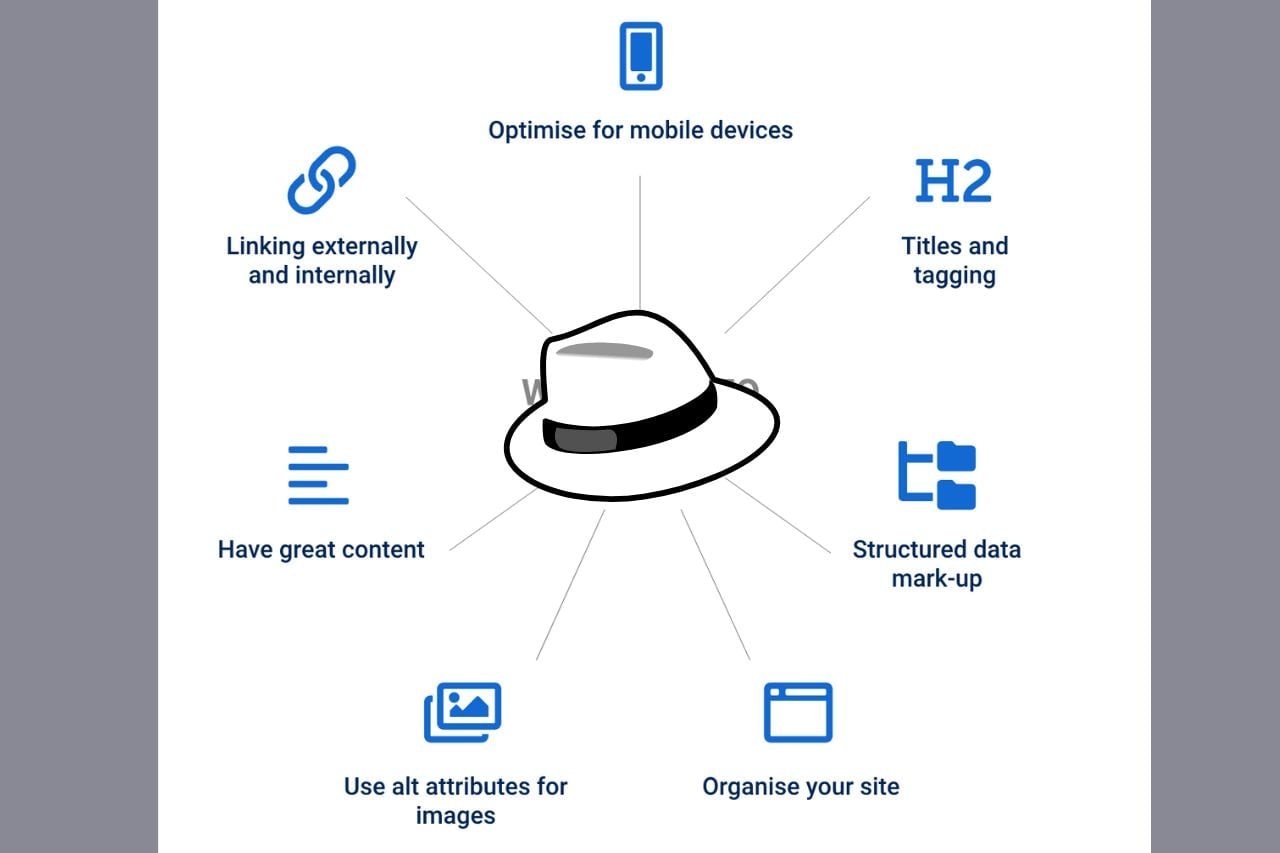
As AI search visibility becomes increasingly valuable, some brands have attempted to manipulate AI systems through questionable tactics. This has led to the emergence of black hat AEO approaches designed to artificially influence citation behavior.
These tactics often include mass-producing low-quality AI-generated pages, embedding hidden prompts within content, creating shallow listicles solely for visibility manipulation, or building unnatural authority signals designed to inflate perceived trustworthiness.
While these approaches may create temporary gains, they carry substantial long-term risk.
AI systems are becoming increasingly sophisticated at evaluating content quality, contextual authenticity, and informational value.
Brands relying on manipulative strategies frequently experience severe visibility declines once AI models detect weak quality signals. White hat AEO follows the opposite philosophy.
Instead of attempting to manipulate AI systems, sustainable AEO focuses on becoming the most credible, useful, and extractable source available for a given topic. This approach prioritizes real expertise, factual integrity, unique insights, and genuinely valuable user experiences.
The brands achieving lasting AI visibility are not gaming the system. They are earning trust from it.
Advanced AEO Strategies That Improve AI Citations
Here are some advanced AEO Strategies that improve AI citations:
1. Demonstrate Strong E-E-A-T Signals
Experience, Expertise, Authoritativeness, and Trustworthiness remain foundational for AI visibility.
AI systems consistently favor content connected to recognized experts, authoritative domains, and reliable informational ecosystems.
Articles with verified authorship, reputable citations, and factual consistency tend to achieve stronger citation frequency.
Brands can strengthen E-E-A-T by associating every piece of content with a qualified expert, maintaining detailed author biographies, referencing primary sources, and consistently updating information to preserve accuracy.
Authority is no longer optional in AI search. It is essential.
3. Improve the AI Bot Experience
Even exceptional content cannot earn citations if AI systems struggle to access or interpret it.
Technical optimization has therefore become a core component of advanced AEO strategies. Websites must prioritize clean architecture, fast loading performance, crawler accessibility, and simplified informational hierarchy.
New developments such as llms.txt are also reshaping AI accessibility. While robots.txt controls whether crawlers can access content, llms.txt helps AI systems understand which pages deserve prioritization and how information should be interpreted.
This distinction matters because discoverability and comprehension are not the same thing.
A technically accessible website creates a stronger foundation for AI retrieval and citation.
3. Create AI-Readable Content Structures
AI systems favor content that is easy to extract and summarize.
Long, cluttered introductions, dense paragraphs, and confusing layouts reduce extraction efficiency significantly. Pages should instead emphasize clarity, concise structure, and semantic organization.
Content becomes more AI-readable when headings directly reflect user questions, explanations remain concise, and important insights appear early within sections rather than being buried beneath unnecessary filler.
Well-structured content improves both human usability and machine comprehension simultaneously.
4. Use Proprietary Data to Earn Attribution
One of the most powerful advanced AEO strategies involves publishing original insights unavailable elsewhere.
AI systems routinely synthesize generic information from multiple sources without attribution. However, unique data creates a direct reason for citation because the information can only be traced back to one source.
This includes:
- Proprietary benchmarks.
- Internal case studies.
- Original surveys.
- Fresh industry statistics.
- Distinct frameworks.
- Contrarian insights supported by evidence.
The more differentiated the information, the more likely AI systems are to reference the source directly.
Brands dominating AI visibility often become known for owning specific ideas, statistics, or methodologies within their industry.
4. Optimize for Conversational Query Fan-Outs
AI search experiences are inherently conversational. Users rarely stop after one question. Instead, initial prompts trigger chains of follow-up queries that expand deeper into a topic. This creates what many experts call “query fan-outs.”
Brands optimizing only for the initial search prompt miss substantial citation opportunities further along the conversation journey.
Advanced AEO strategies, therefore, focus on anticipating follow-up questions before users ask them.
Content should address adjacent concerns, implementation guidance, comparisons, objections, and related informational pathways within the same page experience. Each section should function as a standalone answer while contributing to the broader topic ecosystem.
This structure increases the likelihood of earning citations across multiple conversational touchpoints instead of just one.
Why Measurement Matters in AEO
One of the greatest challenges in AI visibility is the absence of native reporting infrastructure.
Unlike traditional SEO platforms that provide ranking reports and traffic analytics, AI systems currently offer very limited transparency regarding citation performance.
Brands therefore need specialized workflows capable of tracking:
- AI citations.
- Brand mentions.
- Query visibility.
- AI-generated references.
- Citation frequency trends.
Without measurement, optimization becomes reactive guesswork rather than strategic refinement.
The brands succeeding in AI search are not only creating optimized content. They are actively monitoring how AI systems interact with their information and adjusting accordingly.
FAQS
Does Schema Markup Help with AEO?
Yes, schema markup plays a major role in AEO. Structured data helps AI systems better understand the meaning and organization of content. FAQ schema, HowTo schema, article schema, and author schema can improve content extraction and increase citation potential.
What is E-E-A-T in AEO?
E-E-A-T stands for Experience, Expertise, Authoritativeness, and Trustworthiness.
These signals help AI systems determine whether a source is credible enough to cite. Strong E-E-A-T signals often come from expert authorship, reliable sourcing, authoritative backlinks, and consistent factual accuracy.
Can Small Websites Succeed with AEO?
Yes, smaller websites can perform extremely well in AI search if they provide high-quality, differentiated content. AI systems sometimes prioritize topical expertise and originality over brand size, especially when smaller websites publish unique research or detailed niche insights.
What is White Hat AEO?
White hat AEO refers to ethical optimization strategies designed to earn citations naturally through useful, trustworthy, and well-structured content. It focuses on real expertise and user value instead of manipulative shortcuts intended to trick AI systems.
What is Black Hat AEO?
Black hat AEO involves manipulative tactics designed to artificially influence AI visibility. Examples include mass-producing low-quality AI content, embedding hidden prompts, or creating misleading authority signals. These tactics may produce temporary gains but often result in long-term visibility losses.
What is llms.txt?
llms.txt is an emerging framework designed to help AI systems understand and prioritize important content on a website. Unlike robots.txt, which controls crawler access, llms.txt focuses on improving AI comprehension and content prioritization.
How Does Proprietary Data Help With AEO?
Proprietary data increases citation potential because AI systems prefer unique information that cannot easily be found elsewhere. Original surveys, benchmarks, internal case studies, and exclusive statistics give AI engines a reason to attribute information directly to a specific source.
What are Query Fan-outs in AI Search?
Query fan-outs occur when one AI-generated response leads to multiple related follow-up questions. AI search experiences are conversational, so users often continue exploring related topics. Brands that optimize content for these conversational pathways can earn citations across multiple stages of the search journey.
How Can Brands Track AI Citations?
Brands can track AI citations using specialized AI visibility platforms and monitoring tools. These tools help identify where brands are being cited, how often they appear in AI-generated answers, and which competitors dominate citation visibility across different topics.
Does Traditional SEO Still Matter for AEO?
Yes, traditional SEO still provides the technical and authority foundation needed for AEO success. Crawlability, page speed, backlinks, semantic optimization, and structured site architecture all contribute to stronger AI visibility and citation potential.
How Long Does it Take to Improve AI Visibility?
Improving AI visibility can take weeks or months depending on competition, authority, content quality, and optimization consistency. Brands that continuously publish structured, authoritative, and differentiated content typically see stronger long-term results.
What are the Best Tools for AEO?
Several tools can help with AEO, including AI visibility tracking platforms, schema validation tools, content intelligence software, analytics platforms, and brand monitoring systems. These tools help brands monitor citations, optimize structure, and strengthen authority signals across the web.
Is AEO Replacing SEO?
AEO is not replacing SEO entirely, but it is evolving the way optimization works. Traditional search rankings still matter, but AI-generated answers are becoming increasingly influential. Modern digital visibility now requires both SEO and AEO working together.
What is the Biggest Mistake Brands Make With AEO?
One of the biggest mistakes brands make is creating generic content with no unique value. AI systems rarely cite repetitive information that already exists everywhere else. Brands that fail to provide originality, expertise, or structured clarity often struggle to gain visibility in AI-generated search results.
Related Searches:
Digital Marketing Artificial Intelligence