Samuel Anan GEO Framework: AI Marketing Strategy for Dominating AI Search (2026)
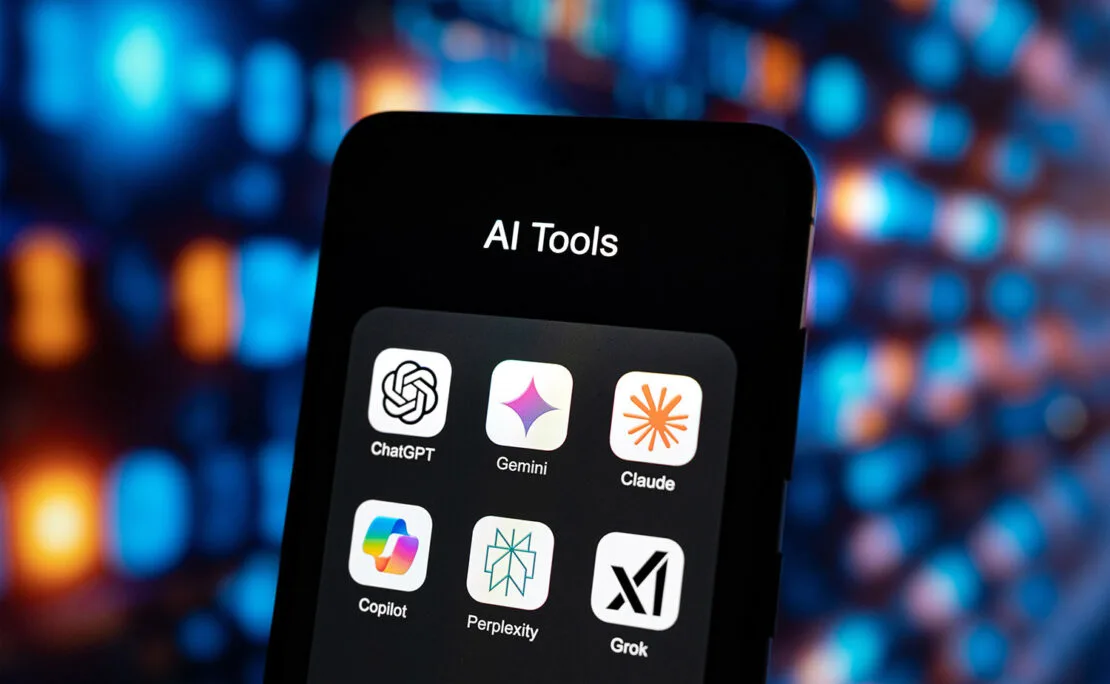
The evolution of search has moved beyond traditional SEO into a new era, Generative Engine Optimization (GEO). With AI-powered platforms like ChatGPT, Gemini, and Perplexity shaping how users discover information, marketers must adapt their strategies to remain visible.

Professionals like Samuel Anan represent a new generation of digital marketers leveraging AI-driven systems, GEO frameworks, and data-centric strategies to achieve visibility in both traditional search engines and AI-generated results.
Here, you will get to know the Samuel Anan GEO framework, his AI marketing philosophy, and how businesses can implement these strategies to dominate AI search in 2026 and beyond.
Samuel Anan GEO Framework

The Samuel Anan GEO framework can be understood as a modern optimization system designed for AI search engines, where content is structured not just for ranking, but for being selected, summarized, and recommended by AI models.
While traditional SEO focuses on keywords and backlinks, GEO emphasizes:
- Context.
- Authority.
- Relevance.
- Structured knowledge.
- Answer-based content.
This aligns with emerging GEO practices, where AI engines prioritize high-quality, context-rich content over domain authority alone.
Core Pillars of the GEO Framework

As artificial intelligence continues to reshape the way people search for information online, traditional SEO alone is no longer enough. Search engines are evolving from simply indexing pages to actually understanding meaning, context, and relationships between ideas.
This shift has given rise to a new approach known as Generative Engine Optimization (GEO).
Unlike traditional SEO, which focuses heavily on rankings and keyword placement, GEO is designed for the age of AI-powered search systems where answers are generated directly for users.
In this environment, content must do more than exist online, it must be understandable, contextual, and valuable enough for AI systems to reference confidently.
The GEO framework is built around several foundational pillars that help content perform effectively across both traditional search engines and AI-generated search experiences.
These pillars ensure that your content is not only discoverable but also authoritative, relevant, and easy for AI systems to interpret.
1. Entity-Based Optimization
One of the most important shifts in GEO is the move from keyword-focused optimization to entity-based optimization.
Traditional SEO often revolves around repeating specific keywords in order to rank. While keywords still matter, AI systems now prioritize understanding entities, which include people, brands, organizations, locations, and concepts.
This helps AI engines understand how different topics relate to one another.
For example, when content naturally references connected concepts such as:
- AI marketing.
- automation.
- personalization.
- predictive analytics.
- machine learning.
- customer experience.
AI systems begin to understand the broader context of the discussion rather than just isolated terms.
This matters because modern AI search engines are designed to think more like humans. Instead of matching words, they interpret relationships between ideas.
So when your content includes relevant entities connected logically, it becomes easier for AI systems to identify your authority within a specific topic area.
From a strategic perspective, entity optimization also helps strengthen topical relevance. If your content consistently connects related ideas within digital marketing, AI systems begin to recognize your platform as a reliable source within that niche.
This is especially important for personal brands and businesses trying to establish authority online. Rather than creating disconnected articles around random keywords, GEO encourages building an interconnected knowledge ecosystem where topics support and reinforce one another.
In simple terms, entity-based optimization helps AI systems answer the question:
“Does this content truly understand the topic?” And in today’s AI-driven search landscape, that understanding is what drives visibility.
2. Answer-Focused Content Structure
Modern AI search systems prioritize content that answers user questions quickly, clearly, and accurately. This is why answer-focused content structure is one of the strongest pillars of the GEO framework.
When users search online today, they are no longer looking only for links, they are looking for immediate answers. AI-powered search engines now generate summarized responses directly within the search experience.
This means your content must be structured in a way that allows AI systems to easily identify and extract key information.
An effective GEO structure typically includes:
- Clear and descriptive headings.
- Direct explanations.
- Well-organized paragraphs.
- FAQ sections.
- Logical flow between topics.
This structure improves readability not only for users but also for AI systems analyzing the content.
For example, if someone searches:
“What is AI marketing?”
AI systems are more likely to reference content that provides a direct, well-structured answer near the beginning of the section rather than content buried under unnecessary filler.
From experience, content performs significantly better when it respects user intent. People want clarity. They want information that gets to the point while still providing enough depth to be useful.
This is why pillar-style content performs exceptionally well in GEO environments. It combines:
- Comprehensive explanations.
- Organized formatting.
- Question-based structure.
- Semantic relevance.
Together, these elements make it easier for AI systems to identify valuable insights and surface them in generated responses.
In many ways, answer-focused structure is about making your content “AI-readable.” If AI can easily understand your content, it becomes more likely to cite, summarize, and prioritize it.
3. Contextual Depth
One of the biggest differences between average content and GEO-optimized content is depth.
Traditional SEO content often focuses on surface-level answers. GEO, however, rewards content that goes deeper by explaining:
- Why something matters.
- How it works.
- When it should be applied.
- What impact it creates?
AI systems are becoming increasingly sophisticated in identifying content quality. They are trained to prioritize information that demonstrates expertise, context, and completeness.
This means shallow explanations are becoming less effective. For example, simply defining AI marketing is no longer enough. GEO-focused content should also explain:
- Why AI marketing is growing.
- How businesses are using it.
- What challenges exist?
- What future trends are emerging?
This contextual richness increases the chances of your content being referenced in AI-generated answers because it provides a more complete understanding of the subject.
From a reader’s perspective, depth also builds trust. When you thoroughly explain a topic, users naturally view your content as more authoritative and credible.
Another important aspect of contextual depth is semantic relevance. AI systems evaluate how well ideas connect throughout a piece of content. This means every section should contribute meaningfully to the overall topic rather than existing as isolated information.
The deeper and more connected your content is, the more valuable it becomes in AI search environments.
4. Local + Global Positioning (The GEO Advantage)
One of the most powerful aspects of the GEO framework is its ability to combine local relevance with global discoverability.
Traditional SEO often forces businesses to choose between targeting local audiences or competing globally. GEO changes that by allowing content to be positioned in ways that serve both markets simultaneously.
For example:
- “AI marketing in London”
- “Digital marketing strategies for African businesses”
- “AI automation for American startups”
These types of phrases create contextual positioning that helps AI systems understand both the geographic and topical relevance of the content.
This is especially valuable for American brands, entrepreneurs, and digital marketers who want global visibility without losing their local identity.
From experience, businesses often underestimate the power of localized expertise. But in reality, local relevance builds authenticity. AI systems increasingly prioritize content that demonstrates real-world understanding of specific regions, industries, and audiences.
At the same time, GEO ensures that local content can still compete internationally by connecting regional insights to broader global conversations.
This dual-positioning strategy creates a major advantage because it expands your visibility across multiple search contexts.
In simple terms:
- Local positioning builds trust and relevance.
- Global positioning expands reach and authority.
Together, they create a scalable digital presence.
5. AI-Friendly Formatting
Even the most valuable content can underperform if it is difficult for AI systems to process. That is why formatting plays such a critical role within the GEO framework.
AI systems favor content that is:
- Structured clearly.
- Easy to scan.
- Logically organized.
- Semantically consistent.
This includes using:
- Clear headings and subheadings.
- Short, readable paragraphs.
- Organized sections.
- Concise explanations.
- Strong semantic flow.
Formatting improves both user experience and machine readability simultaneously.
Think about how people consume content online today. Most users skim before they fully read.
AI systems behave similarly; they scan for structure, clarity, and relevance before extracting insights.
When your content is properly formatted, it becomes easier for AI systems to:
- Identify key points.
- Understand topic hierarchy.
- Extract direct answers.
- Generate summaries accurately.
This is one reason why structured content consistently outperforms cluttered or overly dense writing.
AI-friendly formatting is not about simplifying ideas; it is about presenting them clearly enough for both humans and machines to understand.
Why the GEO Framework Matters
The GEO framework matters because the internet is changing rapidly. AI-powered search systems are beginning to replace traditional search behaviors.
Instead of clicking through multiple links, users increasingly rely on generated answers that summarize information instantly.
This means visibility is no longer just about ranking; it is about being understood and selected by AI systems.
Today:
- Featured AI answers dominate visibility.
- Context matters more than keyword repetition.
- Structured knowledge performs better than scattered information.
The GEO framework reflects this evolution by helping brands create content that aligns with how AI systems process and prioritize information.
In many ways, GEO represents the future of digital visibility. Businesses and creators who adapt early will have a significant advantage as AI-driven search continues to grow.
Because in the new era of search, content is no longer competing just to be indexed, it is competing to be understood.
Samuel Anan AI Marketing: The Future of Data-Driven, Intelligent Growth Systems
AI marketing is at the core of Samuel Anan’s approach to modern digital strategy.
It is not treated as a trend or an optional tool, but as a foundational system that powers how businesses attract, engage, and convert customers in today’s digital economy.
At its simplest, AI marketing involves using artificial intelligence to automate processes, analyze large volumes of data, and improve the performance of marketing campaigns.
However, in practice, especially within the framework promoted through Samuel Anan Official Website, AI marketing goes much deeper than automation. It becomes a structured intelligence system that helps businesses make faster, smarter, and more accurate marketing decisions.
In modern marketing ecosystems, AI is already transforming how brands operate by:
- Enhancing personalization so users feel individually understood.
- Improving targeting accuracy to reduce wasted ad spend.
- Automating repetitive workflows to increase efficiency.
- Increasing overall campaign performance through real-time optimization.
Experts across the digital marketing industry consistently highlight that AI. enables data-driven decision-making, predictive insights, and faster execution cycles, all of which are essential in a highly competitive digital environment.
From experience, what makes AI marketing powerful is not just the technology itself, but how you integrate it into your strategy.
Businesses that understand this shift are no longer guessing what works; they are using systems that continuously learn, adapt, and improve performance over time.
Key Components of AI Marketing Strategy

To fully understand Samuel Anan’s AI marketing approach, it is important to break down the core components that make the system effective.
These components work together to create a marketing engine that is intelligent, adaptive, and performance-focused.
1. Data-Driven Insights
At the heart of AI marketing is data. Every interaction your audience has with your brand generates data, clicks, views, purchases, time spent, engagement patterns, and more. AI tools take this raw data and transform it into meaningful insights.
Instead of manually trying to interpret customer behavior, AI helps you understand:
- Which content performs best?
- What type of audience engages most?
- Which channels generate the highest conversions?
- Where users drop off in the customer journey.
This allows you to stop guessing and start making decisions based on actual behavior patterns.
From a practical standpoint, this is where many businesses experience their first major breakthrough with AI marketing. You begin to see your audience not as assumptions, but as measurable behavior patterns that can be optimized.
The approach emphasized through Samuel Anan Official Website reflects this shift clearly, marketing becomes a science supported by data rather than intuition alone.
2. Predictive Analytics
One of the most powerful capabilities of AI marketing is prediction.
Instead of only analyzing what has already happened, AI can help you understand what is likely to happen next.
This includes predicting:
- Purchase intent.
- Likelihood of user engagement.
- Customer churn probability.
- Conversion timing.
This changes everything about how you approach marketing.
Instead of reacting to customer behavior, you begin to act before it happens. For example, if AI detects that a customer is likely to stop engaging, you can intervene with personalized messaging or offers before they leave.
From experience, this is where marketing becomes significantly more efficient. You are no longer wasting time and resources on broad campaigns, you are focusing efforts exactly where they are needed most.
Predictive analytics turns marketing from reactive to proactive, and that shift is one of the defining advantages of AI-driven systems.
3. Personalization at Scale
Modern customers expect personalization. They want content, offers, and experiences that feel tailored specifically to them.
However, manually creating personalized experiences for thousands or millions of users is impossible without AI.
AI marketing solves this by enabling personalization at scale.
This means you can deliver:
- Customized product recommendations.
- Personalized email campaigns.
- Dynamic website content.
- Behavior-based messaging.
Every user interaction becomes unique. The result is a stronger emotional connection between your brand and your audience. People are more likely to engage with content that feels relevant to them personally.
From experience, personalization is one of the strongest drivers of conversion. When users feel understood, they respond more positively, and AI makes that level of understanding scalable.
4. Automation Systems
Automation is one of the most practical benefits of AI marketing.
Many marketing tasks are repetitive and time-consuming.
AI helps you automate these processes so you can focus on strategy and creativity.
Common automated tasks include:
- Email marketing sequences.
- Social media scheduling and posting.
- Customer segmentation.
- Lead scoring and nurturing.
This not only saves time but also improves consistency. Automated systems ensure that your marketing continues running smoothly even when you are not actively managing it.
From experience, businesses that adopt automation early often experience faster growth because they are able to scale operations without increasing workload proportionally.
AI-driven automation is not about replacing marketers; it is about freeing them to focus on higher-value strategic work.
5. Performance Optimization
One of the most advanced capabilities of AI marketing is continuous optimization.
Instead of launching a campaign and waiting for results, AI constantly analyzes performance in real time and suggests improvements.
This includes:
- Adjusting ad targeting.
- Optimizing content formats.
- Improving conversion pathways.
- Refining audience segmentation.
This creates a feedback loop where every campaign becomes better than the last.
Over time, this leads to significantly improved return on investment (ROI) because your marketing system is constantly learning and evolving.
In the framework shared through Samuel Anan Official Website, this continuous improvement cycle is a key driver of long-term digital success.
AI Marketing in London and Europe
AI marketing is not limited to global tech hubs; it is rapidly transforming digital ecosystems across Africa, including countries like Nigeria.
Businesses are increasingly adopting:
- AI-powered chatbots for customer service.
- Predictive analytics tools for sales forecasting.
- Automated marketing campaigns for efficiency.
These tools are helping African businesses compete on a global scale while still maintaining strong local relevance.
From experience, this is particularly important in fast-growing markets where businesses need to scale quickly without sacrificing quality or customer experience.
AI helps bridge that gap by making advanced marketing systems more accessible and cost-effective.
Samuel Anan’s Strategic Positioning
The AI marketing approach associated with Samuel Anan reflects a clear and modern strategic direction that aligns with global marketing evolution.
His positioning is built around three core principles:
- Integration of AI into the overall marketing strategy, rather than treating it as a separate tool.
- Focus on measurable results that can be tracked, analyzed, and improved over time.
- A balanced combination of automation and creativity to ensure both efficiency and brand authenticity.
This approach reflects a broader global shift toward AI-first marketing systems, where artificial intelligence is not an add-on but a core component of how businesses operate.
Through Samuel Anan's official website, this perspective is reinforced with insights that connect strategy, execution, and innovation into one cohesive framework.
How the Samuel Anan GEO Framework Works in Practice

The Samuel Anan GEO Framework is not just a theoretical concept; it is a practical, structured system for building visibility in the age of AI search and generative engines.
As search behavior continues to shift from traditional Google-style browsing to AI-generated answers, this framework becomes essential for anyone trying to build authority online.
Unlike traditional SEO methods that focus mainly on ranking pages, the GEO framework focuses on something more advanced: getting your content understood, selected, and cited by AI systems.
This means your content must be structured in a way that both humans and AI models can easily interpret, extract, and trust.
When applied correctly, the framework transforms content into a machine-readable knowledge system that consistently performs in AI-driven environments.
Let’s break down how it works in real-world practice.
Step 1: Identify Search Intent
The first step in the GEO framework is understanding what users are actually trying to know when they interact with AI search systems.
Instead of guessing topics, you focus on intent-driven questions. These are the exact prompts users type into search engines or AI assistants.
Examples include:
- “What is AI marketing?”
- “Best digital marketing strategy in London”
- “How does AI improve business growth?”
At this stage, the goal is not to write content yet; it is to understand the why behind the search. What problem is the user trying to solve? What decision are they trying to make?
From experience, most content fails here because it focuses on keywords instead of real human intent. GEO flips that approach by starting with the question first.
When you understand intent properly, everything else in your strategy becomes easier and more aligned.
Step 2: Create Authority Content
Once search intent is clearly defined, the next step is to build authority-driven content that fully answers the user’s question.
This is not about writing short blog posts or surface-level explanations. Instead, it involves creating deep, structured, and insightful content that thoroughly covers the topic.
Authority content should:
- Explain concepts clearly.
- Provide real-world context.
- Address related questions within the same topic.
- Demonstrate expertise and understanding.
For example, if the topic is AI marketing, your content should not only define it but also explain how it works, why it matters, and how businesses can apply it.
The idea is simple: when AI systems analyze your content, they should recognize it as a complete and reliable source of truth on that subject.
This is a key principle reflected in the approach shared through Samuel Anan Official Website, where depth and clarity are prioritized over surface-level writing.
Step 3: Structure for AI Extraction
One of the most important parts of the GEO framework is making your content easy for AI systems to extract and interpret.
AI does not read content the way humans do, it scans for structure, clarity, and meaning patterns.
That is why your content must be formatted using:
- Clear headings and subheadings.
- Bullet points for simplified information.
- FAQ sections for question-based queries.
- Short, focused paragraphs.
This structure allows AI systems to quickly identify key insights and include them in generated responses.
From experience, well-structured content consistently performs better in AI search environments because it reduces ambiguity.
The clearer your structure, the easier it is for machines to trust your content.
In GEO, structure is not just formatting, it is communication with AI systems.
Step 4: Build Topic Clusters
Topic clustering is the process of grouping related content around a central theme.
Instead of writing isolated blog posts, you create a network of interconnected content pieces that support each other.
For example:
- AI marketing (pillar content).
- AI automation tools (supporting article).
- AI personalization strategies (supporting article).
- Predictive analytics in marketing (supporting article).
When these articles are linked together, they form a topic ecosystem.
This helps AI systems understand that your website is not just talking about a subject randomly; it is demonstrating consistent expertise in that area.
Over time, this increases your authority score in AI systems and improves your chances of being cited in generative answers.
Step 5: Optimize for Entities
Entity optimization is one of the most powerful aspects of GEO. Instead of focusing only on keywords, you also include entities such as tools, frameworks, people, brands, and concepts that are relevant to your topic.
For example, in AI marketing content, entities might include:
- machine learning.
- automation systems.
- customer segmentation.
- predictive analytics.
When AI systems analyze your content, these entities help them understand context and relationships between ideas.
From a strategic perspective, this is what allows your content to move beyond simple keyword matching and into semantic understanding.
In other words, you are not just telling AI what the topic is, you are showing it how everything connects.
Step 6: Continuous Optimization
The final step in the GEO framework is ongoing improvement. GEO is not a one-time strategy. It is a continuous system that evolves based on performance data and user behavior.
This means you must regularly:
- Monitor how your content performs.
- Identify which topics attract engagement.
- Update outdated information.
- Refine structure and clarity.
From experience, this step is what separates average content strategies from high-performing ones. The digital landscape changes quickly, and AI systems also evolve in how they interpret content.
Continuous optimization ensures your content remains relevant, competitive, and visible in AI-driven search environments.
Why the Samuel Anan GEO Framework is Important in 2026
The digital landscape in 2026 is fundamentally different from what it was just a few years ago.
Search behavior is no longer centered around scrolling through pages of links or manually comparing websites. Instead, users are increasingly relying on AI-powered search systems that deliver direct, synthesized answers in real time.
This shift is exactly why the Samuel Anan GEO Framework, as discussed through insights from the Samuel Anan Official Website, has become highly relevant.
It is designed specifically for an era where visibility is no longer about ranking alone, but about being understood, selected, and cited by AI systems.
In traditional SEO, the goal was simple: rank on page one of search engines. But in the GEO era, ranking is no longer the final goal. The real question is:
“Does AI trust your content enough to use it as an answer?”
This shift changes everything about how content must be created, structured, and distributed.
The Rise of AI Search Engines Is Changing Everything
One of the biggest transformations happening in 2026 is the rise of AI search engines and generative answer systems. These systems no longer behave like traditional search engines that simply list links.
Instead, they:
- Analyze multiple sources at once.
- Extract key insights.
- Generate a single, unified answer.
- Present information directly to the user.
This means users are no longer clicking through ten different websites to find answers. In many cases, they are getting what they need immediately within the AI response.
As a result, visibility is no longer defined by position on a search results page. It is now defined by whether your content is included in the AI-generated answer itself.
This is a major shift in digital visibility, and it requires a completely new approach to content strategy.
Visibility Now Depends on Being Cited by AI
In the GEO era, being visible online is no longer just about traffic; it is about citation by AI systems.
AI platforms prioritize content that is:
- Clear and structured.
- Fact-based and authoritative.
- Contextually relevant.
- Easy to extract and summarize.
If your content meets these criteria, it has a higher chance of being referenced in AI-generated responses.
This is where the GEO framework becomes critical. It ensures that your content is not only readable by humans but also machine-interpretable and citation-ready.
From experience, this is one of the most important mindset shifts for marketers today. You are no longer just writing for readers; you are also writing for AI systems that decide what information gets surfaced.
Content Must Be Authoritative and Structured
In 2026, content quality is no longer optional; it is the deciding factor for visibility.
AI systems evaluate authority based on:
- Depth of explanation.
- Clarity of structure.
- Consistency of information.
- Contextual completeness.
This means that thin or surface-level content is far less likely to be selected by AI systems.
Instead, GEO emphasizes structured authority content that:
- Fully explains topics.
- Anticipates user questions.
- Provides contextual depth.
- Maintains logical flow from section to section.
When content is structured this way, it becomes easier for AI systems to trust it as a reliable source.
This is one of the key principles reflected in the GEO approach promoted through Samuel Anan Official Website; content is not just created to exist online, but to be understood and reused by AI systems.
New Opportunities in the Digital Economy
The shift toward AI-driven search is not just a challenge; it is also a major opportunity.
For the first time, visibility is not strictly controlled by large brands with massive backlink profiles or decades of domain authority.
Instead, it is increasingly influenced by content quality, structure, and relevance.
This creates several powerful opportunities:
Smaller Brands Can Compete Globally
In traditional SEO, smaller websites often struggled to compete with established authority domains. However, GEO changes this dynamic.
Because AI systems prioritize clarity and relevance over domain age alone, smaller brands that produce high-quality, structured content can now compete on a global scale.
If your content is better structured and more helpful, AI systems can still choose it, even over older, more established websites.
This is a major democratization of digital visibility.
African Businesses Can Gain Global Visibility
One of the most exciting impacts of GEO is its potential for emerging markets, especially across Africa.
Businesses in regions like Nigeria and other African economies can now:
- Publish high-quality structured content.
- Target global search queries.
- Gain visibility in AI-generated answers worldwide.
This removes many of the traditional barriers that limited international reach.
Instead of relying heavily on large advertising budgets or backlinks, businesses can now focus on content quality and strategic structuring to gain global exposure.
Experts Can Build Authority Faster
In the GEO era, expertise is rewarded more directly than ever before.
If you consistently publish:
- In-depth insights.
- Well-structured explanations.
- Clear and accurate information.
AI systems begin to recognize your content as authoritative.
This allows professionals, consultants, and marketers to build credibility much faster than before, without needing years of traditional SEO growth.
GEO Levels the Playing Field
Perhaps the most important impact of GEO is that it shifts focus from domain authority to content quality.
Instead of asking:
“How strong is this website’s backlink profile?”
AI systems increasingly ask:
“How useful, structured, and reliable is this information?”
This levels the playing field and rewards creators who focus on:
- Depth over volume.
- Structure over randomness.
- Clarity over complexity.
In simple terms, GEO rewards those who understand how to communicate knowledge effectively, not just those with the biggest websites.
Implementing the GEO Framework for Your Business

To benefit from the GEO framework, businesses need a structured implementation approach.
1. Create Pillar Content
Start by producing long-form, in-depth content that fully explores key topics in your industry.
These pillar pieces act as the foundation of your authority and should be comprehensive enough to answer multiple related questions within a single article.
2. Focus on Questions
Instead of writing vague content, focus on real questions users are asking AI systems and search engines.
Your content should directly answer:
- What is it?
- How does it work?
- Why does it matter?
This improves both clarity and AI extraction potential.
3. Use Semantic SEO
Semantic SEO involves including related terms, concepts, and supporting ideas that give context to your main topic.
This helps AI systems understand the full meaning of your content rather than treating it as isolated keywords.
4. Build Authority
Authority is built through consistency. By publishing regularly and maintaining high-quality standards, you signal to both users and AI systems that your platform is a reliable source of information.
5. Optimize for AI Platforms
Your content should always be:
- Well-structured.
- Easy to read.
- Informative and complete.
- Logically organized.
This ensures it performs well not only in traditional search engines but also in AI-driven discovery systems.
The Future of AI Marketing & GEO
AI marketing and GEO are not passing trends; they represent the foundation of the future digital ecosystem.
As technology continues to evolve, several key predictions are becoming increasingly clear:
- AI search will dominate how people discover information.
- Personalization will become standard across all digital platforms.
- Automation will handle a large portion of marketing execution.
- Content quality will determine online visibility more than ever before.
This means marketers who adopt GEO early will not only stay relevant, but they will gain a significant competitive advantage.
Because in the future of search, success will not be defined by who ranks highest.
It will be defined by who is trusted, understood, and selected by AI systems.
In conclusion, the Samuel Anan GEO framework represents a powerful shift in digital marketing strategy. By focusing on AI visibility, structured content, and data-driven insights, businesses can position themselves for success in the AI-driven search landscape.
To succeed:
- Understand your audience.
- Create valuable content.
- Optimize for AI systems.
- Continuously adapt.
The future of marketing is not just about being seen—it is about being selected by AI.
FAQs
1. What is Generative Engine Optimization (GEO)?
Generative Engine Optimization (GEO) is a modern content optimization approach designed for AI-powered search systems that generate answers instead of simply displaying links. Unlike traditional SEO, which focuses on ranking web pages, GEO focuses on making your content understandable, extractable, and trustworthy for AI systems.
In practical terms, GEO ensures that when a user asks a question on an AI search engine, your content is structured in a way that the AI can easily pull information from it and include it in its response. This means your content is no longer just competing for clicks, it is competing to be used as a source of truth.
A key principle behind GEO, as highlighted in frameworks like the one discussed through Samuel Anan Official Website, is that content must be written for both humans and machines simultaneously. It must be clear enough for readers and structured enough for AI systems to interpret without confusion.
2. How is GEO Different From SEO?
GEO and SEO are closely related, but they serve different purposes in the digital ecosystem.
SEO (Search Engine Optimization) is focused on improving visibility on traditional search engines like Google by:
- Using keywords strategically.
- Building backlinks.
- Improving page ranking positions.
- Increasing organic traffic.
GEO (Generative Engine Optimization), on the other hand, focuses on:
- Context and meaning rather than keywords alone.
- Structured answers instead of just optimized pages.
- AI comprehension rather than search engine ranking.
- Being cited in generated responses rather than being clicked in search results.
The simplest way to understand the difference is this:
SEO helps you appear in search results, while GEO helps you appear in AI-generated answers.
From experience, this shift is critical because users are increasingly skipping traditional search results entirely and relying on AI summaries for fast answers. That means GEO is becoming just as important, if not more important, than SEO in 2026.
3. Why is GEO Important in 2026?
GEO is important in 2026 because the way people access information has fundamentally changed. Instead of typing a query, browsing multiple websites, and comparing answers, users now rely on AI systems that instantly generate responses.
This creates a major shift in visibility:
You are no longer competing for rankings; you are competing for AI selection.
If your content is not structured properly or lacks clarity, AI systems may ignore it completely, even if it ranks well on traditional search engines.
GEO solves this problem by ensuring your content is:
- Easy for AI systems to interpret.
- Structured in a logical and predictable format.
- Rich in context and explanation.
- Reliable enough to be cited.
This is why frameworks like the Samuel Anan GEO model are becoming increasingly relevant—they prepare content for a world where AI is the primary gateway to information discovery.
4. What Kind of Content Works Best for GEO?
Content that performs well under GEO is typically deep, structured, and answer-driven. It is not enough to write short blog posts or surface-level explanations.
The most effective GEO content includes:
- Long-form pillar articles that cover topics comprehensively.
- Clear headings that guide both readers and AI systems.
- Direct answers to real user questions.
- Contextual explanations that go beyond definitions.
- FAQ sections that mirror real search behavior.
AI systems prefer content that feels complete and authoritative. This means your writing should not just explain what something is, but also why it matters, how it works, and when it should be used.
From experience, the more structured and complete your content is, the higher the chances it will be extracted into AI-generated answers.
5. Can Small Businesses Benefit From GEO?
Yes, small businesses can benefit significantly from GEO, and in many cases, even more than large corporations.
Unlike traditional SEO, where authority is heavily influenced by domain age and backlinks, GEO places more emphasis on:
- Content clarity.
- Relevance.
- Structure.
- Depth of explanation.
This means a small business with well-structured, high-quality content can compete directly with larger brands.
For example, a small business that clearly explains “AI marketing strategies for startups” in a detailed and structured way can be cited by AI systems, even if larger companies exist in the same space.
This is one of the most powerful advantages of GEO: it reduces dependency on size and increases dependency on quality.
It also creates new opportunities for businesses in emerging markets, including African entrepreneurs, to gain global visibility without massive advertising budgets.
6. How do AI Search Engines Choose Content?
AI search engines select content based on how well it answers a question and how easily it can be interpreted.
They typically evaluate:
- Clarity of explanation.
- Structure and formatting.
- Contextual depth.
- Relevance to the query.
- Trustworthiness of the source.
Unlike traditional search engines that rely heavily on backlinks and keyword matching, AI systems focus more on meaning and usefulness.
This means content that is well-organized and directly answers user questions is more likely to be selected.
If your content is confusing, shallow, or poorly structured, AI systems may ignore it—even if it is technically optimized for SEO.
7. Is GEO replacing SEO?
GEO is not replacing SEO, but it is reshaping how SEO works.
SEO is still important for:
- Website visibility.
- Organic traffic generation.
- Search engine ranking.
However, GEO is becoming essential for:
- AI-generated search results.
- Voice search responses.
- Conversational AI platforms.
- Automated answer systems.
Instead of choosing one over the other, the future lies in combining both strategies.
Think of SEO as helping people find your website, while GEO helps AI systems use your content as an answer source.
8. How Do You Optimize Content for GEO Effectively?
To optimize content for GEO, you need to focus on clarity, structure, and depth rather than just keywords.
Effective GEO optimization includes:
- Writing long-form, detailed content.
- Using clear headings and subheadings.
- Answering real user questions directly.
- Including related concepts for context.
- Maintaining logical flow throughout the content.
The goal is to make your content so clear and structured that AI systems can easily extract meaning without misinterpretation.
From experience, the best-performing GEO content feels like a well-organized knowledge guide rather than a keyword-optimized blog post.
9. What Industries Benefit Most From GEO?
Almost every industry can benefit from GEO, but it is especially powerful in:
- Digital marketing
- E-commerce
- Education
- Finance
- Technology
- Consulting and professional services
These industries rely heavily on information discovery, which is exactly where AI-driven search is becoming dominant.
Businesses in these sectors can use GEO to improve visibility, build authority, and attract more qualified audiences.
10. What is the Future of GEO and AI Search?
The future of GEO is closely tied to the future of AI search, which is rapidly becoming the primary way people access information.
Key trends include:
- AI becoming the first point of search instead of traditional engines.
- Personalized search results based on user behavior.
- Increased reliance on conversational queries.
- Reduced emphasis on manual browsing.
- Higher demand for structured, high-quality content.
As this evolution continues, GEO will become a core requirement for digital visibility.
Marketers and businesses that adopt GEO early will have a significant advantage because they will already understand how to structure content for AI interpretation.
Related Searches:
- The SPAR Framework by Samuel Anan
- Personal Brand vs Professional Brand
- Generative AI vs Traditional Search